Wedding seating guide
How to Create a Wedding Seating Plan (Without Losing Your Mind)
Last updated: March 9, 2026
If you've started thinking about your wedding seating plan, you've probably already realised something: it's harder than it looks.
At first it sounds simple - just put people at tables, right? But then you remember that your college friends don't know your work friends, your aunt and uncle haven't spoken in ten years, and somehow you're trying to make sure everyone feels comfortable while still keeping the room balanced.
The good news is that creating a seating plan doesn't have to be stressful. With a simple approach and a little patience, it can actually become one of the more satisfying parts of planning your reception.
Here's a calm, practical way to build your seating plan step by step.
Start With Your Guest List
Before you think about tables or seats, take a moment to get your guest list organised.
You don't need anything complicated - just a list of everyone who is attending. If you can, group people loosely by how they know you. Family members, school friends, work colleagues, childhood friends, partners, and so on.
This part is important because when you begin assigning tables later, these natural groupings will make the whole process much easier.
Look at Your Venue Layout
Next, think about the space itself.
Most venues will give you a layout showing how many tables fit in the room and how many guests each table holds. Some tables might seat eight people, others ten.
Once you understand the shape of the room, it becomes much easier to imagine where groups of people might naturally sit.
For example, you might already know that close family will sit near the top table, while groups of friends can be spread around the room.
Start With the Easy Tables
When couples begin seating plans, they often try to place every guest at once. That can get overwhelming quickly.
Instead, start with the tables that are obvious.
Immediate family is usually the easiest place to begin. Parents, siblings, grandparents, and other close relatives often naturally belong together.
Once those tables are set, the rest of the room starts to fall into place.
Think About Who Will Enjoy Sitting Together
The goal of a seating plan isn't perfection - it's comfort.
Think about which guests will genuinely enjoy spending an evening together. Friends who share stories, cousins who grew up together, colleagues who already know each other.
You don't need to overthink every table. Most people are happy chatting with whoever they're seated beside.
What matters most is avoiding obvious awkward combinations and keeping couples together.
Make Adjustments Slowly
Once the main tables are arranged, step back and look at the overall balance.
Are tables evenly filled?
Are there any guests who might feel out of place?
Does the room feel balanced?
It's completely normal to move people around a few times before everything feels right.
In fact, most couples adjust their seating plan several times as RSVPs change.
A Small Tip That Makes This Much Easier
Many couples start their seating plan using a spreadsheet, which works well in the beginning.
But once you begin moving guests between tables, it can quickly become difficult to visualise the room.
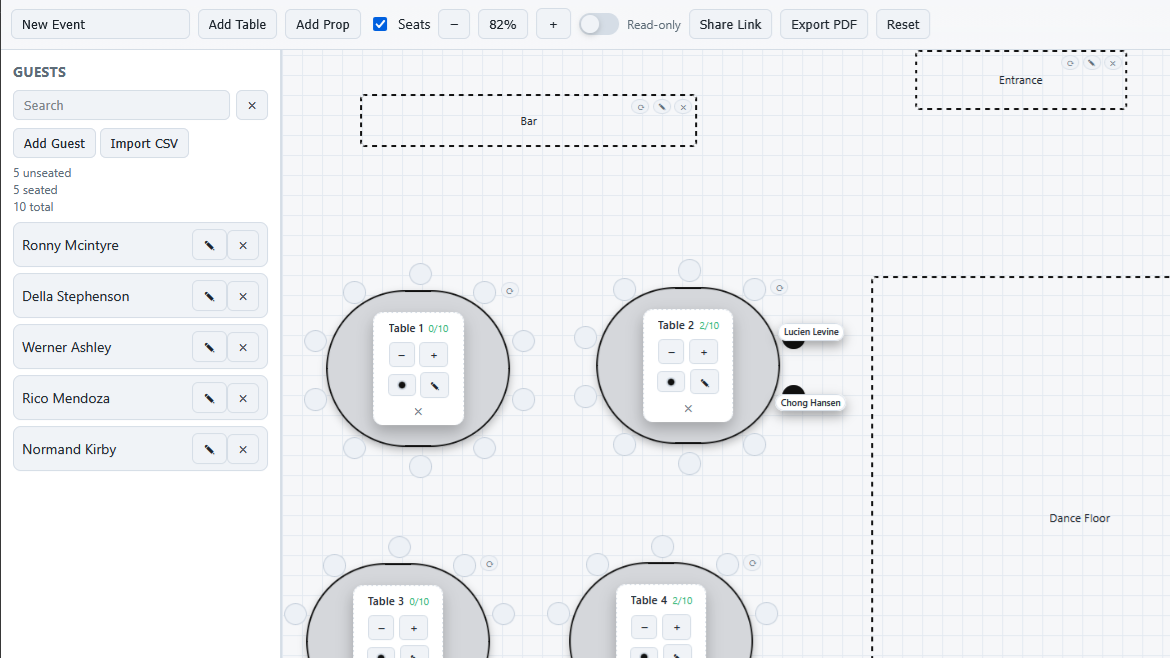
Using a visual seating planner lets you see the entire layout and move guests around easily until everything feels right.
If you'd like to try that approach, you can experiment with layouts using MySeatPlanner, which was designed to make this part of planning a little less stressful.
Remember: No Seating Plan Is Perfect
Every wedding seating plan has a few compromises. That's completely normal.
What matters most is that the people you care about are there, celebrating with you.
And once the music starts and the evening gets going, most guests won't remember which table they were at - they'll remember the laughter, the speeches, and the atmosphere of the day.
So take your time, trust your instincts, and enjoy the process.