Mistakes to avoid
Top Wedding Seating Plan Mistakes to Avoid (And How to Fix Them)
Last updated: March 9, 2026
Creating a wedding seating plan is one of those tasks that sounds simple at first... until you actually sit down to do it.
Suddenly you're juggling guest groups, family relationships, table sizes, and last-minute RSVPs. It's completely normal to feel like you're solving a small puzzle.
The good news is that most seating plan problems are very common - and thankfully, they're also very easy to avoid once you know what to look out for.
Here are some of the most common mistakes couples make when planning their seating chart, along with a few simple ways to keep things running smoothly.
Waiting Until the Last Minute
Many couples leave their seating plan until the final weeks before the wedding. It's understandable - there are so many other details to organise first.
But creating a seating chart takes more time than people expect.
Guests may change their RSVPs, table sizes might shift, and sometimes small adjustments are needed to keep tables balanced.
Starting the process a little earlier gives you space to make those changes without stress.
Splitting Up Couples
It might sound obvious, but this mistake happens more often than you might think - especially when tables start filling up quickly.
When you're arranging guests, it's always worth double-checking that couples and partners are seated together. Even if one person knows others at the table, guests usually feel more comfortable arriving and sitting with their partner.
A quick final check of your list can prevent awkward moments on the day.
Overthinking Every Table
It's natural to want every table to be absolutely perfect.
You might find yourself wondering whether certain guests will get along, or whether people will feel comfortable sitting together.
In reality, most guests are very relaxed about where they sit. Weddings are social events, and people are usually happy chatting with new faces.
The goal isn't perfection - it's simply creating tables where guests feel welcome and included.
Forgetting the Flow of the Room
Sometimes couples focus so much on individual tables that they forget to look at the room as a whole.
For example, you might want to keep close family near the front of the room, or place lively groups of friends where the atmosphere will feel energetic.
Taking a moment to step back and look at the full layout can help the seating arrangement feel more balanced.
Not Expecting Changes
Almost every wedding seating plan changes a few times before the big day.
Guests may update their RSVPs. A couple might be added to the guest list. A table might need one extra seat.
Instead of aiming for a perfect final version immediately, it helps to think of your seating plan as a flexible draft that evolves as your guest list settles.
Trying to Visualise Everything in a Spreadsheet
Many couples begin their seating plan using a simple spreadsheet or guest list. This works well in the early stages, especially when you're organising names and groups.
But once you begin moving guests between tables, it can become difficult to picture how the whole room actually looks.
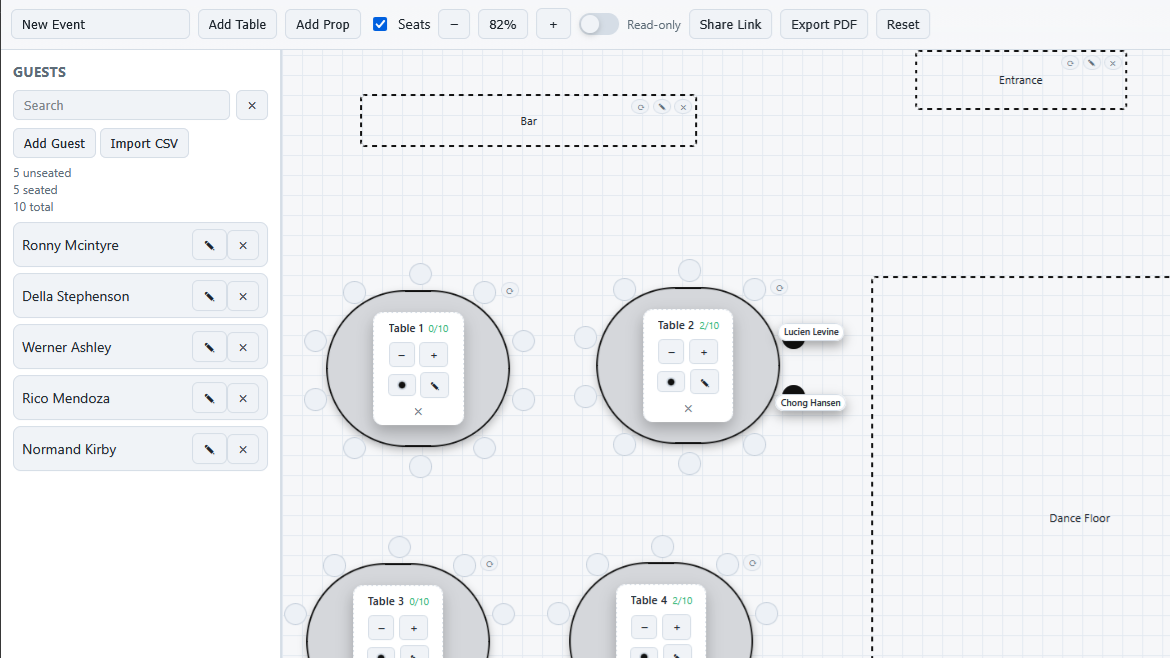
Seeing the tables laid out visually often makes it much easier to experiment with different arrangements until everything feels right.
A Seating Plan Is Only Part of the Day
It's easy to get caught up in the details of where every guest will sit, but once the reception begins, most people are focused on celebrating.
Guests move around, talk to friends, and spend time on the dance floor. The seating plan simply helps the evening begin smoothly.
What people remember most about a wedding isn't the seating chart - it's the atmosphere, the laughter, and the feeling of celebrating together.
A Simple Way to Make Planning Easier
If you'd like to make the process a little easier, using a visual seating planner can help you move guests between tables while seeing the entire room layout at once.
Many couples find this makes it much easier to adjust tables and experiment with different arrangements.
You can try organising your layout with MySeatPlanner, which was designed to make creating a seating plan feel much simpler.