Large event example
Wedding Seating Plan for 100 Guests (A Simple Example)
Last updated: March 9, 2026
Reaching the point where you're planning seating for 100 guests can feel like a big milestone in your wedding planning.
It's exciting, of course - a hundred people you care about coming together to celebrate with you. But when you sit down to actually organise those guests into tables, it can suddenly feel like a much bigger task than expected.
The good news is that once you break the room down into manageable pieces, a seating plan for 100 guests becomes far less intimidating than it first appears.
Let's walk through a simple example to show how it might look.
Start With the Room Layout
Most venues that host weddings of around 100 guests will use round tables that seat 8 to 10 people.
For example, if each table seats 10 guests, your layout might look something like this:
- 10 tables
- 10 guests per table
Some venues mix slightly smaller and larger tables, but the principle stays the same. Once you know how many tables you're working with, the whole plan becomes much easier to organise.
Begin With Family Tables
A good place to start is usually with close family.
For many weddings, the first few tables naturally fall into place:
- Table 1: Immediate family
- Table 2: Groom's immediate family
- Table 3: Extended family
- Table 4: Grandparents and close relatives
Starting here helps you quickly fill several tables with guests who already know each other well.
Add Your Friend Groups
Next, you can begin placing groups of friends.
Many couples find it easiest to seat friends based on how they know you.
For example:
- College friends
- School friends
- Work colleagues
- Childhood friends
These groups often enjoy sitting together because they already share stories and memories.
You don't have to keep every group completely separate either. Mixing a few guests who know each other across tables can often create a more lively atmosphere.
Think About the Energy at Each Table
One helpful way to think about your seating plan is the energy of each table.
You might have one table filled with close friends who love to dance and celebrate together, while another table is made up of relatives who enjoy catching up over dinner.
Both are perfect for a wedding - the goal is simply to make sure everyone feels comfortable and included.
Don't Worry About Getting It Perfect
One thing couples often realise while creating their seating plan is that it changes several times before the wedding day.
Guests may update their RSVPs. Couples may need to be moved together. A table may need one extra seat.
All of this is completely normal.
The seating plan is simply a way to give the evening structure. Once the celebration begins, guests will spend time moving around, talking to friends, and enjoying the night.
Seeing the Whole Room Makes It Easier
When you're working with a larger guest list, it helps to see the entire room layout instead of just a list of names.
Being able to move guests between tables visually makes it much easier to experiment with different arrangements until everything feels balanced.
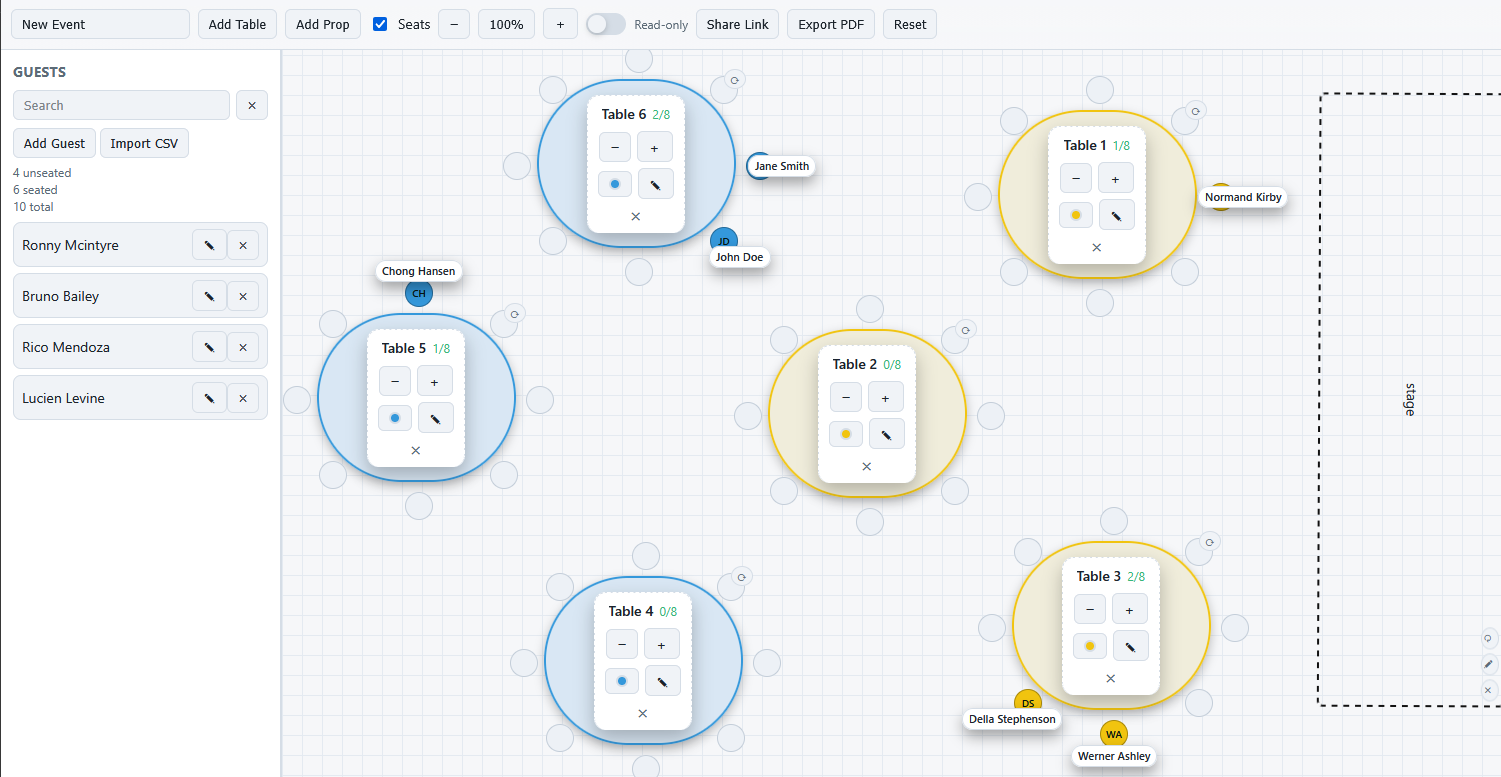
If you'd like to try that approach, you can explore seating layouts using MySeatPlanner, which lets you organise tables and move guests around until your seating plan feels right.
Remember What the Day Is Really About
Planning a wedding with 100 guests means you're surrounded by a lot of people who care about you.
While the seating plan might feel like a puzzle at first, it's simply one small part of bringing everyone together for a memorable celebration.
Take it one table at a time, trust your instincts, and remember that what guests will remember most is the joy of the day - not which chair they were sitting in.